
Knauf Attic Air Sealing: The Huntington Beach Owner’s Guide
Knauf attic air sealing in Huntington Beach typically lands between $1,200 and $2,800 installed, depending on attic square footage and how much of the existing sealant has failed. We stock Knauf-compatible air sealing materials on our trucks and can usually get the job done same day or next day. Most Huntington Beach homeowners don’t go looking for attic air sealing until they notice something else: a bedroom that won’t hold temperature, a dust film on the ceiling fan blades, or an energy bill that climbed for no obvious reason. The air sealing was failing quietly for a while before any of that showed up.
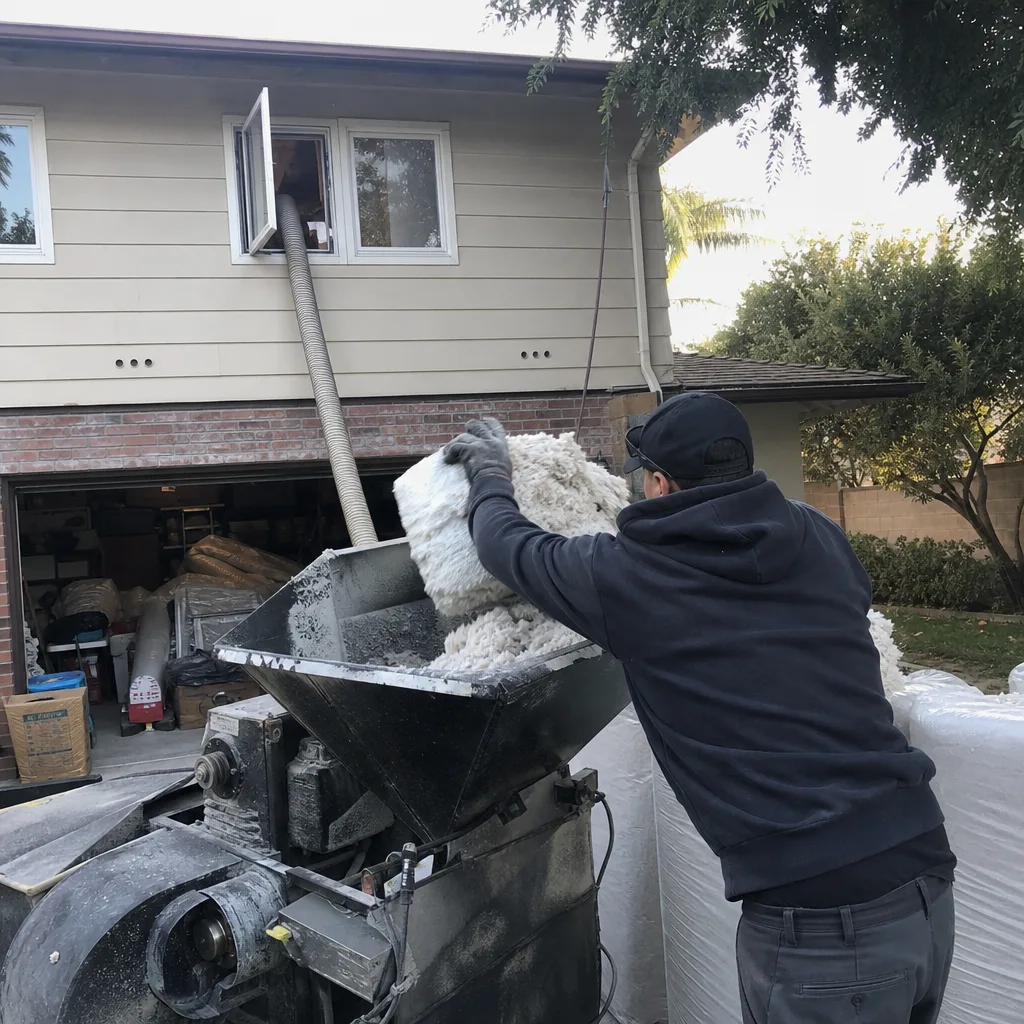
We’re an independent installer, not affiliated with Knauf directly, but we’ve been working with their air sealing and insulation products for years. If you’ve got a Knauf air sealing system that’s underperforming, we know what’s compatible, what’s worth saving, and what needs to come out.
Which Knauf Models This Applies To
Knauf’s attic air sealing line covers a few different product families. The most common in Huntington Beach homes is the Knauf EcoSeal system, a water-based elastomeric sealant applied around penetrations: plumbing vents, electrical boxes, recessed can lights, and top plates. We also see Knauf Comfort Seal in newer builds, which pairs the sealant with Knauf’s blown-in fiberglass or EcoBatt insulation as a complete attic package.
Here’s the compatibility gotcha that catches people: Knauf EcoSeal is not a one-product-fits-all sealant. There are specific formulations for interior versus exterior applications, and using the wrong one in a Huntington Beach attic, where salt air and humidity fluctuate constantly, leads to cracking and peeling within two years. The right product for an unconditioned attic space is the interior-grade EcoSeal, applied at the manufacturer’s specified thickness. If you had a handyman apply a generic caulk or the wrong formulation, that’s almost certainly why it’s failing.
When we open an attic, we check the Knauf product label if it’s still legible, measure the existing bead thickness, and identify which formulation was used. That tells us whether we’re patching isolated failures or redoing the whole seal job. OEM Knauf EcoSeal is what we recommend for anything Knauf-branded. There are quality aftermarket equivalents from companies like Reflectix, but for a Knauf system, staying with Knauf material means the chemistry matches and the warranty work doesn’t turn into a finger-pointing match.
Signs Your Knauf Attic Air Sealing Is Failing
- Temperature swings between rooms. This is the most common complaint we hear from the Bolsa Chica neighborhood down to the State Beach corridor. Air sealing keeps conditioned air from escaping through the attic, and when the sealant around top plates shrinks or cracks, rooms at the far end of the duct run lose cooling first. The HVAC is working, but the envelope isn’t holding.
- Dust collecting on ceiling-mounted surfaces. Failed air sealing lets attic dust and insulation fibers drift down through gaps around light fixtures and ceiling fans. If you’re wiping a gray film off the fan blades every week, that’s attic air coming through.
- Higher summer bills despite a working AC unit. Huntington Beach summers are mild compared to inland, but a home with failed attic sealing leaks cooled air constantly. One hot August with a broken seal can add $80 to $150 to a monthly bill, and it compounds.
- You can see daylight through gaps in the attic floor. When we inspect, we look for visible gaps around plumbing stacks, wiring penetrations, and chimneys. If light passes through, air passes through. Failed Knauf EcoSeal often shrinks away from the penetration entirely, leaving an open channel.
- Unusual drafts or stale smells in upper rooms. A cracked seal around a vent stack doesn’t just leak your conditioned air, it also lets whatever is in the attic migrate down. If a bedroom smells faintly like rosin or fiberglass, that’s the seal failing.
Replacement Cost & What’s Included
In Huntington Beach, expect to pay these ranges for Knauf attic air sealing work:
- Partial re-seal (a few failed penetrations): $350 to $700
- Full attic air sealing, typical 1,200 to 1,800 sq ft home: $1,200 to $2,200
- Full air sealing plus new Knauf blown-in insulation: $2,800 to $5,500
- Air sealing combined with attic cleaning and rodent proofing: add $800 to $1,500
What drives the range? Attic accessibility is the big one. A walkable attic with a plywood floor is a straightforward job. A low-pitch roof with blown-in insulation burying the top plates takes longer and requires more cleanup. Homes near the coast also have more corrosion on HVAC penetrations, and we’ll recommend sealing those metal-to-wood joints with the right Knauf-compatible product rather than whatever was on the truck.
Every air sealing job from Walt’s Insulation is covered by our Done Right Promise: if it’s not done right, we make it right, no runaround. That’s lifetime workmanship, not a 90-day warranty that expires before the next heat wave.
DIY or Call Us?
Attic air sealing is not inherently dangerous like garage door springs or electrical work, but it is one of those jobs where DIY goes wrong in ways that cost more than hiring someone. The two biggest mistakes we see from homeowners in Huntington Beach: using the wrong sealant (silicone caulk shrinks and peels within a season), and missing the primary leak points while sealing cosmetic ones. Attic air sealing is about knowing where air moves, not just caulking what you can see.
What you can safely do yourself: check for visible daylight around plumbing vents and electrical penetrations, and check your attic hatch for a proper seal. That’s useful diagnostic work. But getting the right Knauf formulation, applying it at the correct bead thickness, and doing it without disturbing existing insulation is a job for someone with a truck stocked for it. If you’re in Huntington Beach and suspect the sealing has failed, call us at (657) 222-2148. We’ll give you a straight answer, even if the answer is “your sealing is fine, the problem is elsewhere.”
Walt Brenner’s been doing this since 2000, and one thing we’ve learned: good insulation shouldn’t be something you ever have to think about again. If you’re thinking about it, something failed. Let’s find out what.
FAQs
Properly applied Knauf EcoSeal lasts 15 to 20 years in Huntington Beach’s coastal climate, though homes within a mile of the ocean may see faster degradation from salt air and humidity cycles. Call (657) 222-2148 and we’ll inspect what you have before recommending a full re-seal or a partial patch.
Isolated failures around a few penetrations can be patched for a few hundred dollars; widespread shrinkage, cracking, or the wrong product having been used originally usually means a full re-seal is the honest recommendation. We’ll tell you which one you need after looking at the attic, not before.
A typical Huntington Beach home takes 4 to 8 hours for a full air sealing job, and most of our customers are done by early afternoon. Partial re-seals run 2 to 3 hours.
We stock Knauf EcoSeal and the compatible accessories on our service trucks, so there’s no multi-day wait for parts when we diagnose a failing seal. If you’re calling because a previous contractor said you’d have to wait two weeks for material, call us at (657) 222-2148 instead.
Written by Walt Brenner, Owner, Walt’s Insulation at Walt’s Insulation, serving Huntington Beach and nearby areas.