
Demilec Attic Air Sealing: The Huntington Beach Owner’s Guide
If you have a Demilec spray foam attic that’s started leaking conditioned air, we stock and install Demilec-compatible air sealing materials throughout Huntington Beach, with most jobs running $850 to $2,400 installed depending on how much of the attic envelope needs re-sealing. We keep the common sealants, foam kits, and flashing materials on our trucks, so we can usually handle the job same-day when you call before noon. Most Huntington Beach homeowners discover their air sealing has failed when the upstairs rooms suddenly feel five degrees warmer in August, or when the AC bill jumps $40 to $70 a month without any change in thermostat habits.
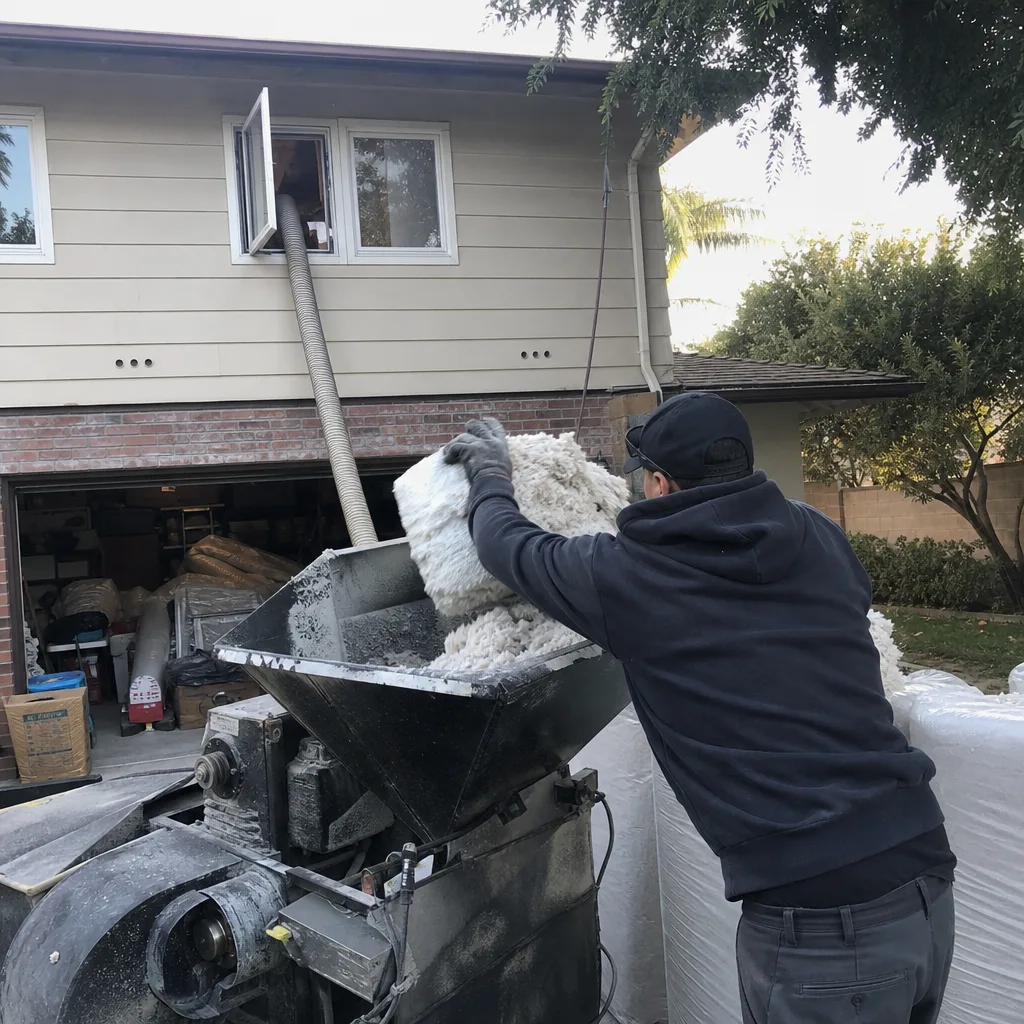
Here’s the part that surprises people: Demilec foam itself rarely fails. What fails is the sealing perimeter around it – the transition points where foam meets framing, can lights, vent penetrations, and top plates. In Huntington Beach’s salt air and summer attic temperatures that regularly hit 140°F, the elastomeric sealants and canisters that finish a Demilec air sealing job take real punishment. That’s the part you’re probably here about.
Key Takeaways
- We stock Demilec-compatible air sealing materials and install them in Huntington Beach homes, typically same-day.
- Most Demilec air sealing failures in coastal Huntington Beach show up first as uneven room temperatures or a creeping electric bill.
- The work is covered by our lifetime Done Right Promise. If it’s not done right, we make it right – no runaround.
- Re-sealing the attic envelope is not a DIY job in a finished house. We’ll explain exactly why below.
Which Demilec Models This Applies To
Demilec’s attic air sealing approach is built around their open-cell and closed-cell spray foam systems – most commonly Heatlok HFO, Sealection 500, and Apex foam lines in Southern California homes, plus the older Sealection Agribalance systems in houses insulated between 2010 and 2018. The air sealing component itself is not a single replaceable “part” like a capacitor or a belt. It’s the combined system of foam applied at the attic floor or roofline, plus the sealant, can foam, and backing materials that close every penetration and seam before the foam goes on.
Here’s the compatibility gotcha we see weekly in Huntington Beach: the sealant you use has to be compatible with the specific Demilec foam chemistry already in your attic. Some solvent-based sealants will soften or discolor open-cell foam on contact. We match the sealing products to the foam type every time. If you’re unsure which Demilec line you have, check the attic access panel or the water heater closet – installers typically leave a product sticker. No sticker? We can identify it by cell structure and density in about five minutes during a site visit.
On the OEM-versus-aftermarket question: Demilec specifies their own line of one-component foam sealants and accessories for use around their spray foam systems. We’ve been installing with their specified materials since Demilec entered the Southern California market, and we keep those products in stock alongside proven equivalents that match or exceed the same specs. For the sealing portion of the work, we will not cut corners with a generic hardware-store foam that shrinks 30% in the first California summer. That’s how you end up back where you started by October.
Signs Your Demilec Attic Air Sealing Is Failing
Here’s what homeowners in Huntington Beach call us about, in order of frequency:
- A hot master bedroom upstairs while downstairs stays cool. The attic sealing boundary has opened up, and summer heat from the 130°F-plus attic is dumping straight into the most exposed rooms. In two-story homes near the Bolsa Chica wetlands, we see this in the west-facing bedrooms first.
- A monthly electric bill that climbs without an obvious reason. Our customers in the Seacliff and Edwards Hill neighborhoods often track this against the previous year. A 15 to 25% jump with no new appliances usually points to lost attic air sealing.
- Drafts around ceiling fixtures, can lights, and attic hatches. Hold a tissue near a ceiling light on a windy afternoon. If it moves, the seal around that penetration has failed. This is the single most common failure point we find in Huntington Beach homes built between 1990 and 2010.
- Dust or attic smell drifting into the living space. When the sealing boundary opens, attic air – with its dust, insulation fibers, and the occasional whiff of rodent activity – has a path into your home. Did you know Huntington Beach’s coastal breezes push attic air down through leaks more than inland static air does? They do, and it’s something only a local crew thinks about.
- Rooms that feel muggy or sticky even when the AC runs. Open sealing gaps pull in moist coastal air from the Huntington Beach marine layer. That moisture condenses on cool drywall and creates that sticky, stale feeling – plus, given enough time, mildew in the insulation.
If several of these sound familiar, the air sealing has lost its integrity. The good news: it’s fixable, usually in a single day.
Replacement Cost & What’s Included
For a typical 1,500 to 2,800 square foot single-story home in Huntington Beach, re-sealing a Demilec-insulated attic runs $850 to $2,400 installed. Smaller jobs – a single bedroom, a bathroom, one side of the house where the seal has visibly opened – start around $400. Larger two-story homes over 3,000 square feet can reach $3,200 when the entire attic perimeter needs re-detailing.
Here’s what drives the price: how much linear footage of sealing has failed, whether we need to remove old failed sealant before applying new, how many penetrations are involved (can lights, bath fans, vent stacks, wiring runs), and whether the attic is walkable or requires crawling. Parts and materials typically make up 30 to 40% of the quote. Labor and attic access conditions make up the rest.
Every re-seal we quote includes the sealant, can foam, backing rod where required, the full labor day, and our lifetime Done Right Promise. We don’t charge a trip fee if you’re inside Orange County. And if you’ve got a written estimate from another Huntington Beach contractor, bring it – we’ll give you a free second opinion on it. That’s a standing offer, not a seasonal promotion.
DIY or Call Us?
There are two things you can safely do yourself before calling anyone. First, check your attic hatch – if it’s uninsulated or the weatherstripping is flattened, that’s a real leak and an easy visual confirmation. Second, look at the ceiling fixtures in the rooms that feel warm. If you see gaps around the trim or feel air moving with the AC off, you’ve found a problem.
Here’s where DIY goes wrong: climbing into a Huntington Beach attic in summer when it’s 140°F up there, working around wiring and recessed lights with expanding foam cans, and trying to match sealant chemistry to existing Demilec foam. Recessed can lights in particular need rated housings and clearance from foam – get that wrong and you’ve created a fire hazard. We’ve also fixed plenty of homeowner jobs where the wrong sealant ate into the existing open-cell foam and made the problem two sizes bigger. Some things are worth paying for. If you’re seeing the signs above, call us at (657) 222-2148 and we’ll walk through what you’re seeing before we ever schedule a visit.
FAQs
Installed correctly, the sealants and foams we use around Demilec insulation typically hold integrity for 15 to 20 years in Huntington Beach’s coastal climate. Salt air and high summer attic temperatures shorten the life of the sealant more than the foam itself, which is why we see resealing needed on houses insulated 12 to 18 years ago. Call us at (657) 222-2148 if you want us to assess whether yours is still holding.
In most Huntington Beach homes, we can repair and replace only the failed sealing materials and leave the existing Demilec foam in place. Foam is not the usual point of failure – the sealing perimeter around it is. We’ll tell you honestly if the foam itself has degraded or separated and needs attention, but that’s the exception, not the rule.
A typical sealing repair for one attic zone takes 3 to 5 hours on site. A full-attic re-detail on a larger Huntington Beach two-story home usually runs one full day, occasionally a day and a half if there’s significant old sealant removal involved. We show up with everything on the truck, so there’s no mid-job run to the supply house.
We stock the sealing products, can foams, and accessories on our trucks, including Demilec-specified products and the equivalent materials from other manufacturers we trust like Reflectix for the radiant barrier component of some attic assemblies. If your job requires a specialty product, we can usually source it within one business day and schedule you promptly after that.
If you’re in Huntington Beach and your Demilec attic is showing any of the signs above, call us at (657) 222-2148. A live person answers – no voicemail, no answering service, day or night. We’ll talk through what you’re seeing, give you a straight answer, and if it makes sense, get someone out to your house. The one down the road, with a published address and a license number, and a lifetime promise behind the work. Good insulation shouldn’t be something you ever have to think about again.
Written by Walt Brenner, Owner, Walt’s Insulation at Walt’s Insulation, serving Huntington Beach and nearby areas.