
Icynene Attic Insulation: The Huntington Beach Owner’s Guide
If you’ve got Icynene spray foam in your Huntington Beach attic and it’s starting to pull away from the rafters, feel brittle, or you’ve noticed your upstairs rooms getting warmer than they used to, here’s the short version: we stock Icynene-compatible attic insulation, we install it same-week in most cases, and a typical Huntington Beach attic runs between $1,800 and $4,200 installed depending on square footage and whether we’re doing a full removal first. Most homeowners call us after they’ve poked their head up there and seen foam that’s shrunk, cracked, or turned dark from moisture. That’s the thing about spray foam in a coastal climate: when it fails, it fails quietly, and you feel it in your energy bill long before you see it.
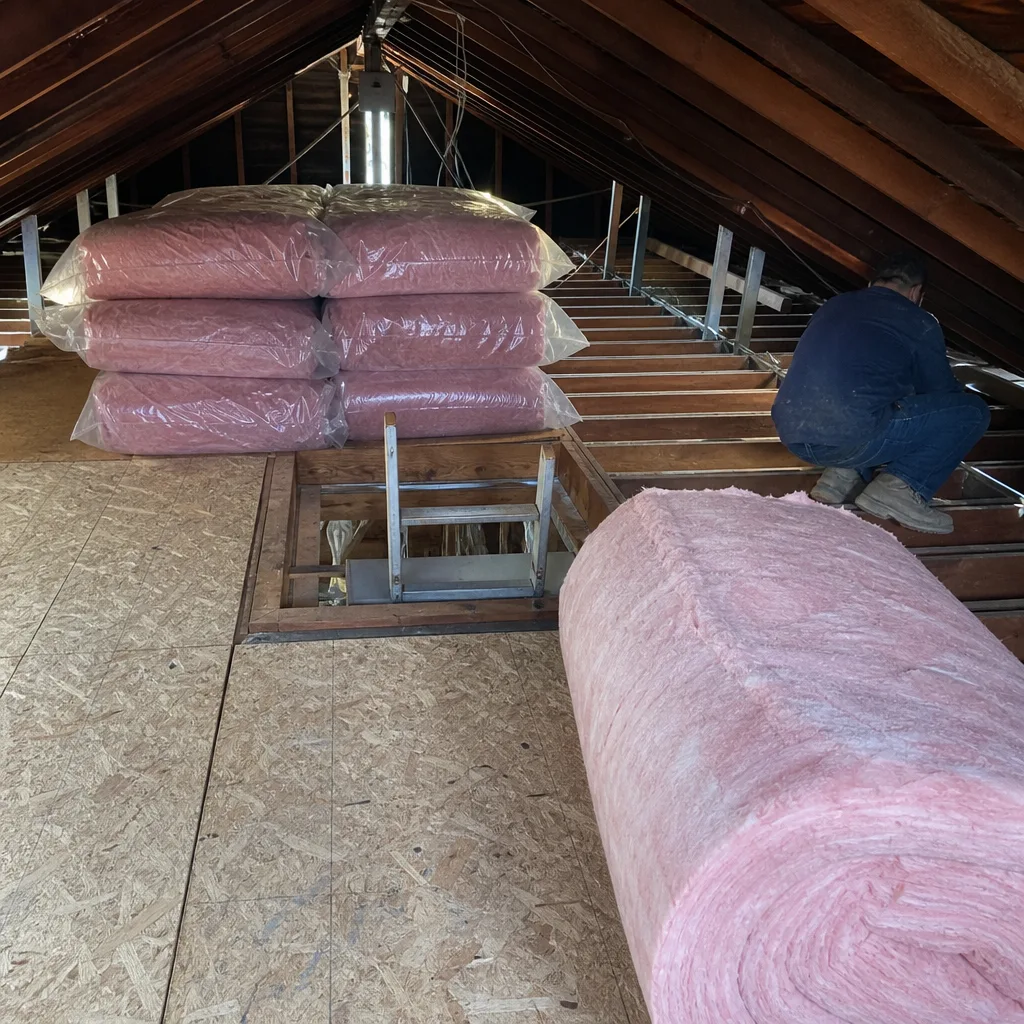
The honest truth about Icynene in Huntington Beach is that salt air and attic heat cycles put real stress on the foam. We’ve been installing and replacing it here long enough to know exactly what goes wrong and what’s worth fixing. Walt Brenner started this company in 2000, and we’ve worked homes from Bolsa Chica to the State Beach corridor. We’re not a franchise and we’re not affiliated with Icynene – we’re the one down the road, and we answer our own phone.
Which Icynene Models This Applies To
Icynene has made several formulations over the years, and the compatibility question matters more than people expect. The older open-cell products – Classic and Classic Max – behave completely differently in an attic than the newer closed-cell ProSeal and ProSeal LE lines. Open-cell foam is softer, absorbs moisture, and is more likely to sag or separate from the decking after 15 to 20 years of Huntington Beach humidity. Closed-cell ProSeal holds up better structurally but can develop adhesion failures if it was sprayed during a cold snap or onto dusty framing.
Here’s the compatibility gotcha most homeowners don’t know: you cannot simply spray one Icynene formulation over another and expect it to bond. If your attic has Classic and you want ProSeal, the old foam has to come out first. That’s a removal job, not a top-up. The good news is we stock both open-cell and closed-cell Icynene products on the truck, plus quality equivalent materials from Demilec and Johns Manville for cases where an aftermarket match makes more sense. For most Huntington Beach homes, we recommend going back with what was there originally unless there’s a moisture problem that means the original choice was wrong from the start.
To identify what you have, look for the spray-applied label on the attic access or check your original paperwork. No label? Peel a small piece and look at the cell structure: open-cell tears like a sponge, closed-cell snaps like a cracker. We can confirm it on-site in about ten minutes.
Signs Your Icynene Attic Insulation Is Failing
- Upstairs rooms are 5 to 10 degrees warmer than downstairs starting around 2 p.m. This is the most common call we get from Huntington Beach homeowners in August. What’s happening is the foam has pulled away from the roof decking, creating air gaps that let radiant heat pour through. You can’t see it from the attic access – you have to get up there with a flashlight.
- Energy bills climbing in June through October while your AC runs longer. Spray foam works by sealing, not just insulating. When it fails, you lose the air barrier along with the R-value. A 20% jump in summer cooling cost with no change in habits usually points to insulation failure, not utility rate increases.
- Visible shrinking, cracking, or pulling away from rafters. Open-cell Icynene can shrink as much as 3 to 5% over two decades. That doesn’t sound like much, but a half-inch gap along every rafter is a highway for hot air. If you can slide a butter knife between the foam and the wood, it’s failed.
- Dark spots, musty smell, or visible mold on the foam surface. This is the salt-air problem in action. Open-cell foam absorbs moisture from coastal humidity, and once it stays damp in a hot attic, mold follows. Closed-cell ProSeal resists this much better, which is why we recommend it for homes within two miles of PCH.
- Rodent or pest activity in the attic. Rats love tunneling through spray foam, especially open-cell. Once they’ve carved channels through your insulation, it’s compromised even if the rest looks fine. This is also where our attic cleaning and rodent proofing services come in – you can’t just patch foam over active tunneling.
Replacement Cost & What’s Included
For a typical Huntington Beach single-story home with a 1,200-square-foot attic, here’s what Icynene replacement actually costs:
- Open-cell Icynene re-spray (no removal needed): $1,800 to $2,600 installed
- Closed-cell Icynene ProSeal re-spray (no removal needed): $2,800 to $3,800 installed
- Full removal of failed open-cell foam plus new ProSeal install: $3,800 to $5,500 installed
- Attic air sealing included with every job: No extra charge – it’s part of doing it right
Every quote includes materials, labor, cleanup, and haul-away of any removed foam. We don’t do vague pricing and we don’t pad the bill after the fact. The price you’re quoted is the price you pay. And since the Done Right Promise covers the workmanship for life, you’re not going to be calling us back to fix a sloppy job – but if you ever do, we’ll show up.
DIY or Call Us?
There’s no safe way for a homeowner to DIY spray foam insulation. The chemicals require professional equipment, proper ventilation, and the foam expands in ways that can damage framing if applied wrong. What you can do yourself is check: get a flashlight, open the attic access, and look for the signs we listed above. Note the foam type, look for gaps or dark spots, and snap a few photos with your phone.
Where DIY goes wrong with Icynene specifically is the moisture question. If you had a roof leak that’s since been fixed, you may not need a full replacement – you may need a targeted repair. But you won’t know that without someone who’s seen hundreds of Huntington Beach attics and knows the difference between cosmetic darkening and actual failure. That’s what we do. Call us at (657) 222-2148 and we’ll tell you straight what you’re dealing with. Estimates are free, and if you’ve got a written quote from another contractor, bring it – we’ll give you a free second opinion.
FAQs
Open-cell Icynene typically lasts 15 to 20 years in Huntington Beach’s coastal climate before it starts shrinking or absorbing enough moisture to lose its seal. Closed-cell ProSeal can last 30-plus years when installed correctly. The salt air and summer heat cycles are the main factors that shorten foam life here compared to inland cities.
Sometimes yes, if the failure is localized – a small patch of shrinkage or a moisture spot from a repaired roof leak. But if the foam has pulled away from rafters across more than 20% of the attic, patching won’t restore your air barrier. Call us at (657) 222-2148 and we’ll assess it honestly, with photos and measurements, before recommending anything.
Most Huntington Beach attics take one day for the job itself. If full removal of old foam is needed, add a second day. We’ll give you an exact window when we quote, and our crew shows up on time – background-checked, uniformed, and ready to work.
We keep both open-cell and closed-cell Icynene products stocked at our shop, along with equivalent materials from Demilec, Johns Manville, and other manufacturers we trust. That means no waiting weeks for product to ship. We can usually be in your attic within a few days of the quote.
If you’re in Huntington Beach and your Icynene insulation is showing its age, call us at (657) 222-2148. A live person answers – that’s always been the rule here, and it always will be. Good insulation shouldn’t be something you ever have to think about again. If you’re thinking about it, it’s time to have someone look at it.
Written by Walt Brenner, Owner, Walt’s Insulation at Walt’s Insulation, serving Huntington Beach and nearby areas.