
Rockwool Radiant Barrier Installation: The Huntington Beach Owner’s Guide
If you have Rockwool insulation already in place and want a radiant barrier installed alongside it, we can typically get it done in Huntington Beach within 24 to 48 hours. Installed pricing for a radiant barrier over existing Rockwool in a standard 1,500 to 2,200 square foot attic runs between $1,800 and $3,200, depending on attic access, rafter spacing, and whether we’re stapling to the rafters or laying over the existing insulation. Most homeowners find out their setup needs attention when upstairs rooms run 8 to 12 degrees hotter than the rest of the house in August, or when the AC runs nonstop from noon to sunset and the attic feels like a furnace the second you pop your head up there.
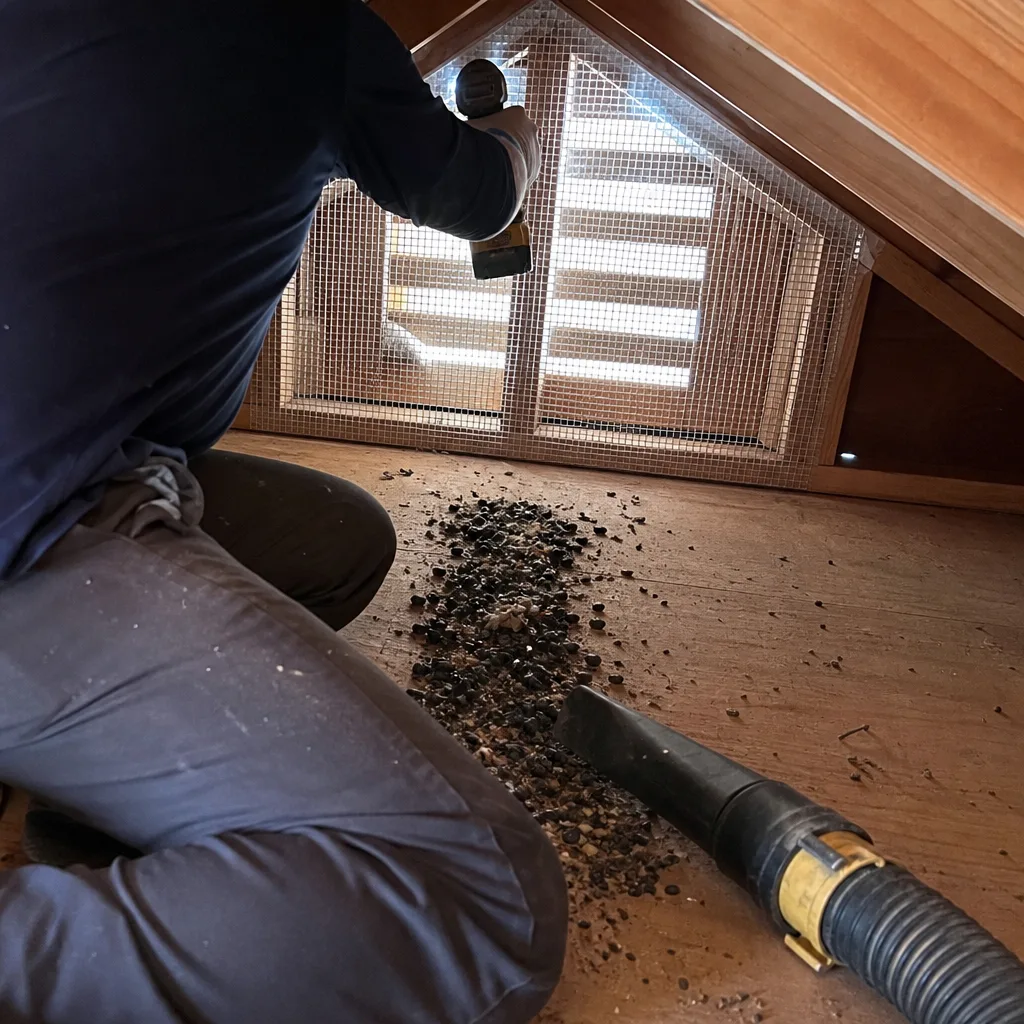
Here’s what most people don’t realize: Rockwool does a great job slowing conductive heat transfer, but it does very little to stop radiant heat. In Huntington Beach, where summer sun beats directly on tile and shingle roofs for 10+ hours a day, radiant heat is the bigger enemy. The two products work together when installed properly, but the order and the spacing matter more than most contractors admit. We’ll get into that below.
Key Takeaways
- Rockwool handles conductive heat; a radiant barrier handles radiant heat. You need both working together for real attic performance in Huntington Beach.
- Typical installed cost: $1,800 to $3,200 for most attics, with same-week scheduling available.
- Stapling a radiant barrier to the bottom of the rafters is the correct method over Rockwool; laying it flat on top of the insulation is a shortcut that fails in coastal humidity.
- We stock radiant barrier material on our trucks, including Reflectix, so we can usually handle a same-trip install when we’re already out for an estimate.
Which Rockwool Models This Applies To
Radiant barrier installation isn’t tied to a specific Rockwool product line the way a replacement part would be for an appliance. Whether you have Rockwool ComfortBatt in the walls, Safe’n’Sound between floors, or blown-in Rockwool in the attic, the radiant barrier goes above or below it, not in place of it. The real compatibility question is your roof framing, not your insulation model.
What actually matters: rafter spacing. Most Huntington Beach homes built between 1960 and 1990 have rafters at 24 inches on center, which means your radiant barrier should come in 48-inch wide rolls or 26-inch wide rolls, depending on whether you’re running it perpendicular or parallel to the rafters. Anything narrower and you’ll spend twice as long cutting and stapling. Older homes near the Bolsa Chica wetlands or in the downtown beach blocks sometimes have nonstandard rafter spacing, 19.2 inches or even 16 inches on center in a few 1950s tract homes, and that changes which roll width makes sense. A good installer checks this before buying material. A lazy one finds out halfway through.
One gotcha specific to radiant barrier over Rockwool: if your attic has blown-in Rockwool, you need to verify there’s still headroom to work safely above it. We’ve seen attics where blown-in Rockwool fills the joist bays so completely that adding a radiant barrier requires building up the decking first, which adds $300 to $600 to the job. That’s the kind of thing you want to know before the quote, not after.
We’re an independent installer in Huntington Beach, not affiliated with Rockwool or Reflectix. We recommend both brands because they perform, but we don’t have a quota to push either one.
Signs Your Rockwool Radiant Barrier Installation Is Failing
- The upstairs won’t cool below 78 degrees on a 90-degree day. This is the number one complaint we hear from Huntington Beach homeowners. When a radiant barrier sags, tears, or was installed flat on top of insulation instead of stapled to the rafters, it stops reflecting heat and starts absorbing it.
- You can see shiny silver material drooping from the attic ceiling. Radiant barrier facing fails at the staple points over time. Coastal humidity accelerates staple corrosion, even in Huntington Beach where we’re technically drier than other coastal cities. If you look up and see gaps or sagging, it’s done.
- The attic smells musty even though there’s no leak. A radiant barrier laid flat over Rockwool traps moisture between the two layers. Moisture plus trapped heat equals mildew, and mildew in an attic travels straight into your air handler.
- Your cooling bill jumped year over year without a rate increase. This is harder to pin down, but if July usage is up 20% or more and your AC is the same age, something in the thermal envelope changed. Failing radiant barrier is one of the usual suspects.
- You see dust lines or dark streaks on the barrier facing. Over time, airborne attic dust settles on the reflective surface and cuts its effectiveness by up to 40%. If the surface looks dull or streaked instead of shiny, it’s reflecting less heat than you think.
Replacement Cost & What’s Included
For a radiant barrier installed over existing Rockwool in a Huntington Beach attic, here’s what we typically see:
- Basic single-story attic (1,200 to 1,500 sq ft): $1,800 to $2,400
- Standard two-story home (1,800 to 2,400 sq ft): $2,400 to $3,000
- Larger homes or complex rooflines (2,500+ sq ft, vaulted sections): $3,000 to $3,600
- Attic decking or access improvements, if needed: $300 to $600 added
Every quote includes the material, all staples and fasteners, removal of failed existing barrier if one’s already there, and cleanup. We don’t charge extra for hauling out old sagging material. The price varies based on three things: attic square footage, how much of the existing barrier needs to come down, and whether your rafters have accessible nailing surfaces or whether we’re fighting around HVAC ducting and recessed light cans. Older Huntington Beach track housing from the 1960s and 70s tends to have tighter attic access, which slows us down, and that shows up in the quote honestly.
Every radiant barrier install we do is covered by our Done Right Promise, which is a lifetime workmanship guarantee. If our barrier sags, tears at the staples, or fails to perform because of how we installed it, we come back and fix it. No runaround, no fighting you on it.
DIY or Call Us?
Installing a radiant barrier is not like replacing a smoke detector. It means working in a 130-degree attic in Huntington Beach summer, handling long rolls of foil that want to coil back on you, and stapling overhead for hours. That said, here’s the honest split.
You can safely check a few things yourself: look up at the barrier facing and see if it’s shiny or dull, check for sagging sections, and look for any gaps where heat is pouring through around can lights or the attic hatch. Those observations will tell you whether you even need us to come out. What you should not do is climb up there and try to re-staple a radiant barrier that’s torn loose over a 20-foot drop. Foil is sharp, attics are hot, and a misstep through a ceiling joist is thousands in drywall repair. We’ve also had to fix a handful of homeowner installs where the barrier was stapled with the wrong facing direction, which turned the attic into an oven and the barrier into a heat trap. That’s worse than no barrier at all.
If you’d rather have it done right the first time, call us at (657) 222-2148. We’ll send a background-checked, uniformed technician to your Huntington Beach home, measure the attic, and give you a written quote before any work starts.
FAQs
A properly installed radiant barrier stapled to the rafters will last 15 to 20 years in Huntington Beach before the facing dulls enough to matter. Barriers laid flat over insulation fail faster, usually in 5 to 8 years, because they collect dust and trap moisture. If yours is over 10 years old and you’re seeing the symptoms above, it’s time to have it looked at. Call (657) 222-2148 and we’ll give you a straight answer on whether replacement makes sense.
Sometimes. If the barrier is sagging in one or two spots and the facing is still shiny, we can re-staple and reinforce those sections for a few hundred dollars. If the facing is dull, stained, or torn in multiple places, patching is throwing good money at a product that’s already past its useful life. We’ll tell you which situation you have, not whichever one makes us more money.
Most standard Huntington Beach attics take one full day, sometimes two if we’re removing a failed barrier first or if your attic access requires extra setup. We’ll give you a specific timeline with your quote, and we show up when we say we will.
We carry radiant barrier rolls on our trucks, including Reflectix, along with the fasteners and tools needed for a same-trip install in most cases. If your attic needs a nonstandard roll width, we can have it within a day or two through our local suppliers. Either way, you’re not waiting weeks.
Good insulation shouldn’t be something you ever have to think about again. If you’re thinking about it now because your upstairs won’t cool off, that’s the problem we fix. Call Walt’s Insulation at (657) 222-2148 for a free estimate, and ask about the $40-off-any-repair-over-$200 offer or the 10 percent discount for seniors and veterans. We’ve been serving Huntington Beach since 2000, and we answer the phone with a live person every time.
Written by Walt Brenner, Owner, Walt’s Insulation at Walt’s Insulation, serving Huntington Beach and nearby areas.